In 2026, smart factory operations are measured against two metrics that are increasingly in tension: higher equipment utilization targets and stricter safety and audit requirements. Unplanned downtime from electrical faults, bearing failures, and overloaded power electronics is the most expensive single category of production loss in most manufacturing environments — and the majority of these failures are preceded by a thermal signature that is detectable days or weeks before the failure event. The problem is not that the warning is absent; it is that conventional monitoring methods — contact temperature sensors, periodic manual inspections with handheld thermal cameras — either miss the exact hotspot location, cannot scale economically across a large asset base, or provide only a snapshot rather than continuous visibility.
Infrared detection using a compact infrared camera module addresses this gap by providing non-contact, continuous thermal visibility that can be embedded directly into the equipment being monitored. The EXATIMES EXA-G series infrared thermal imaging module — available in 384×288 (M317), 640×512 (M617), and 1280×1024 (M1212, pre-sale) configurations — is designed for OEM integration into cabinets, inspection platforms, and industrial systems where miniaturization, low power consumption, and interface flexibility are the primary integration constraints. Understanding how these modules work, what specifications drive selection, and where they deliver the fastest ROI is the foundation of a predictive maintenance sensor strategy that reduces shutdown risk and satisfies the audit trail requirements that 2026 safety governance demands.
The economic case for industrial infrared detection is built on a simple asymmetry: the cost of detecting and correcting a developing fault is a fraction of the cost of the failure event it prevents.
A hotspot in an electrical or mechanical system is a localized region of elevated temperature that indicates an abnormal energy dissipation process. In electrical systems, the most common hotspot sources are increased contact resistance at terminal connections — caused by loose fasteners, corrosion, or oxidation — and overloaded conductors or components that are dissipating more power than their thermal design allows. In mechanical systems, the most common hotspot sources are bearing friction from inadequate lubrication, misalignment, or wear, and coupling or drive component heating from torque imbalance or resonance.
In each case, the hotspot appears before the failure event — sometimes days or weeks before — because the physical process that generates the hotspot (increasing resistance, increasing friction) develops gradually. A monitoring system that detects the hotspot and generates an alert while the fault is still developing gives the maintenance team time to schedule a planned intervention rather than responding to an emergency shutdown.
In 2026, the value of predictive maintenance sensors that provide continuous thermal visibility extends beyond the direct cost of avoided downtime. Safer inspections — reducing the frequency with which technicians need to open energized panels for manual thermal checks — reduce the arc flash exposure risk that is increasingly scrutinized in safety audits. Better root-cause evidence — thermal history logs that document the temperature trend leading up to a fault — supports the maintenance governance and insurance documentation requirements that are becoming standard in industrial operations. And the ability to demonstrate a systematic hotspot monitoring program is increasingly a requirement for ISO 55001 asset management certification and for insurance premium negotiations.
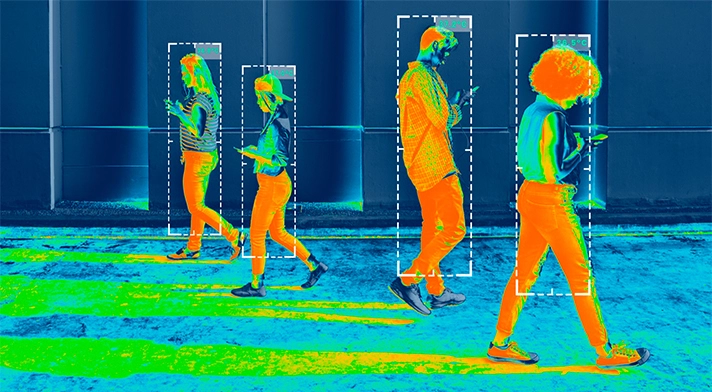
An infrared camera module converts the thermal radiation emitted by objects in its field of view into a digital or analog image that represents the temperature distribution across the scene — without physical contact with the objects being measured.
All objects above absolute zero emit thermal radiation in the infrared spectrum. The intensity and spectral distribution of this radiation depend on the object's temperature and emissivity. The EXA-G series modules operate in the 8 to 14 μm long-wave infrared band — the atmospheric transmission window where thermal radiation from objects at industrial operating temperatures (typically -40°C to several hundred degrees Celsius) is most efficiently detected. The uncooled detector array — using vanadium oxide (VOx) or amorphous silicon (α-Si) microbolometer technology — absorbs the incoming infrared radiation and converts it to an electrical signal that is processed by the module's signal processing circuit and image processing algorithms to produce a thermogram: a two-dimensional map of the temperature distribution in the scene.
The thermogram can be output as an analog video signal (PAL format, standard configuration) or as a digital signal in one of several optional formats — SDI, CameraLink, LVDS, BT656, BT601 — depending on the integration requirements of the host system. The module's RS-232 communication interface (with RS-422 and RS-485 options) provides the command and control channel for configuring the module's operating parameters and accessing temperature measurement data.
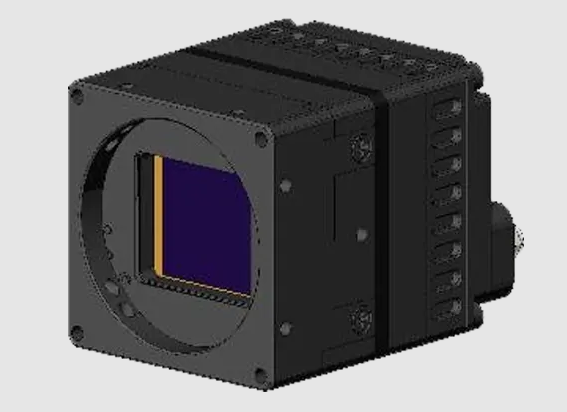
The EXA-G series modules are designed for OEM integration — the 28×28 mm movement size, the low power consumption (≤1.5 W for the M317, ≤2 W for the M617), and the wide supply voltage range (5 to 12 V DC standard, 9 to 24 V DC optional) make them compatible with the space and power constraints of cabinet-mounted monitoring systems, inspection UAV payloads, and mobile robot sensor heads. The extended functionality — accurate temperature measurement, high frame rate output, and target centroid extraction — supports the alarm logic and analytics integration that continuous monitoring applications require.
Selecting the correct infrared camera module for an OEM integration requires locking the specifications that determine both the thermal performance and the integration cost before the design is committed.
| Specification | M317 | M617 | M1212 (pre-sale) |
|---|---|---|---|
| Resolving power | 384×288 | 640×512 | 1280×1024 |
| Infrared detector | VOx / α-Si | VOx / α-Si | VOx |
| Pixel pitch | 17 μm | 17 μm | 12 μm |
| NETD | ≤40 mK | ≤40 mK | ≤50 mK |
| Frame rate | 50/60 Hz, max 100 Hz | 50/60 Hz, max 300 Hz (with windows) | 25 Hz |
| Rated power consumption | ≤1.5 W | ≤2 W | ≤5 W |
| Working temperature | -40°C to +60°C | -40°C to +60°C | -40°C to +60°C |
Resolution determines the spatial detail available in the thermogram — a 640×512 module provides four times the pixel count of a 384×288 module, which translates to either a higher spatial resolution at the same field of view or the same spatial resolution at a wider field of view. For cabinet monitoring applications where the target is a busbar or terminal block at close range, 384×288 is typically sufficient. For UAV-based patrol applications where the target may be a bearing housing or a cable lug at several meters distance, 640×512 provides better spatial resolution for hotspot localization.
NETD — Noise Equivalent Temperature Difference — is the smallest temperature difference that the detector can distinguish from noise. A lower NETD value indicates higher sensitivity. The M317 and M617 modules specify NETD ≤40 mK, which means the detector can reliably distinguish temperature differences of 40 millikelvin or smaller. For predictive maintenance applications where the early-stage hotspot may be only 2 to 5°C above the ambient temperature of the surrounding components, a low NETD is essential for reliable early detection.
The M317 supports up to 100 Hz frame rate and the M617 supports up to 300 Hz (with windowing), which is relevant for applications involving moving targets — conveyor belts, rotating equipment, or UAV-mounted modules where the platform motion requires a high frame rate to avoid motion blur in the thermogram. For fixed cabinet monitoring applications, 50/60 Hz is typically sufficient.
| Interface | Standard or Optional | Typical Use Case |
|---|---|---|
| Analog video (PAL, CCIR) | Standard | Simple display or analog frame grabber integration |
| SDI | Optional digital | Broadcast-quality digital video over coaxial cable |
| CameraLink | Optional digital | High-speed machine vision system integration |
| LVDS | Optional digital | Short-distance high-speed digital integration |
| BT656 / BT601 | Optional digital | Embedded processor integration |
| RS-232 | Default communication | Module configuration and temperature data access |
| RS-422 / RS-485 | Optional communication | Long-distance or multi-drop communication |
Interface selection determines the integration cost more than any other single specification. A system that already has a PAL analog video input can use the standard configuration without additional interface hardware. A system that requires digital video integration — for image processing, alarm logic, or data logging — must specify the appropriate digital output format and confirm that the host system's frame grabber or processor supports it.
The 28×28 mm movement size with a 44.4 mm reference depth and 4-M2 mounting holes provides a compact, standardized mechanical interface that can be accommodated in most cabinet-mounted or UAV-payload enclosure designs. The mechanical interface is customizable per order, which allows the mounting configuration to be adapted to the specific integration geometry without modifying the module's optical or electronic design.
Fixed-mount infrared camera modules installed inside power distribution cabinets provide continuous thermal monitoring of busbars, circuit breakers, cable lugs, and terminal blocks without requiring the cabinet to be opened for inspection. The module's field of view is configured to cover the highest-risk components — typically the busbar connections and the cable terminations at the highest-loaded circuits — and the alarm logic is set to trigger when the temperature of any monitored component exceeds a defined threshold above the ambient temperature or above the temperature of adjacent components on the same phase.
This application eliminates the periodic manual thermal inspection cycle — which requires a qualified technician with a handheld thermal camera, a cabinet opening procedure, and an arc flash risk assessment — and replaces it with continuous automated monitoring that generates an alert when a developing fault is detected. The reduction in manual inspection frequency reduces both the labor cost and the arc flash exposure risk.
Bearing housings, coupling guards, and gearbox surfaces are natural hotspot locations for mechanical faults — bearing wear, lubrication degradation, and misalignment all produce characteristic thermal signatures that appear before the bearing reaches the end of its service life. A compact infrared module mounted to monitor the bearing housing of a critical motor or conveyor drive provides a continuous thermal baseline that can be compared across shifts, across identical assets on the same production line, and across time to detect the gradual temperature rise that indicates a developing bearing fault.
The M617's 640×512 resolution and ≤40 mK NETD provide the spatial resolution and sensitivity needed to detect early-stage bearing heating at typical monitoring distances of 0.5 to 2 meters, and the high frame rate capability — up to 300 Hz with windowing — supports monitoring of high-speed rotating equipment where the thermal signature may be intermittent.
Adding an infrared camera module to a UAV or mobile robot payload enables automated thermal patrol routes that cover large facility areas — outdoor substations, large production halls, pipeline infrastructure — with repeatable thermal baselines that manual inspection cannot match. The EXA-G series modules' low power consumption (≤1.5 W to ≤2 W) and compact form factor are compatible with the payload constraints of inspection UAVs, and the extended functionality — target centroid extraction — supports the automated hotspot localization that UAV-based inspection analytics require.
Non-contact thermal verification of heating and curing processes — oven temperature uniformity, heat seal quality, composite curing profiles — is a natural application for infrared camera modules where the alternative is a sparse array of contact thermocouples that cannot capture the spatial temperature distribution across the process zone.
Step one: identify the assets with the highest downtime cost. Rank the production assets by the cost of an unplanned failure event — including the direct repair cost, the production loss during the repair, and the secondary damage cost if the failure cascades to adjacent equipment. These are the assets where infrared monitoring delivers the fastest ROI.
Step two: define the monitoring method. Determine whether continuous fixed-mount monitoring, periodic patrol monitoring (robot or UAV), or a hybrid approach is appropriate for each asset category. Fixed-mount monitoring provides continuous visibility but requires a module per monitoring point; patrol monitoring covers more assets per module but provides only periodic snapshots.
Step three: select the module specifications. Choose the resolution based on the target size and monitoring distance — 384×288 for close-range cabinet monitoring, 640×512 for longer-range or higher-resolution applications. Confirm the NETD requirement based on the expected temperature differential of the early-stage fault. Select the frame rate based on whether the target is stationary or moving. Select the interface based on the host system's video input and communication capabilities.
Step four: design the integration. Define the mounting location, the field of view and lens selection, the protective window or enclosure specification, and the cable routing to avoid EMI interference from adjacent power equipment. Confirm the supply voltage and power budget against the module's rated consumption.
Step five: set the alarm logic. Define the alarm thresholds — absolute temperature limit, temperature delta above ambient, rate-of-rise threshold, and thermal imbalance between phases or between identical assets — to minimize false alarms while ensuring that developing faults are detected before they reach the failure threshold.
| Cost Item | Without Infrared Monitoring | With Embedded Infrared Camera Module |
|---|---|---|
| Unplanned downtime events per year | Higher — faults detected at or after failure | Lower — developing faults detected and corrected during planned maintenance |
| Manual inspection labor | Higher — periodic thermal scans by qualified technician | Lower — automated continuous monitoring reduces scan frequency |
| Arc flash exposure events | Higher — frequent cabinet openings for manual inspection | Lower — reduced need to open energized cabinets |
| Secondary damage cost | Higher — cascade failures from undetected hotspots | Lower — early detection prevents cascade |
| Audit trail quality | Lower — periodic snapshots only | Higher — continuous temperature history and alarm logs |
| Module maintenance | Not applicable | Periodic lens and window cleaning; calibration verification per QA schedule |
The ROI calculation for a fixed-mount infrared monitoring installation is most straightforward for assets with a documented unplanned failure history. If a critical motor drive cabinet has experienced two unplanned failures in the past three years at an average downtime cost of $40,000 per event, the annual avoided downtime cost from continuous thermal monitoring is approximately $26,000. Against the cost of a module installation — hardware, integration, and commissioning — the payback period is typically less than one year for high-consequence assets.
In 2026, thermal visibility is becoming a core component of smart factory predictive maintenance — not a supplementary audit tool. Embedding compact infrared camera modules into power distribution cabinets, bearing monitoring systems, and inspection UAV payloads converts hidden overheating from an undetected risk into an actionable alert that maintenance teams can respond to before the failure event occurs. The EXATIMES EXA-G series — with 384×288 to 640×512 resolution options, ≤40 mK NETD, multi-format digital and analog outputs, RS-232/RS-485 communication, and a 28×28 mm form factor that fits the space constraints of OEM integration — provides the thermal detection performance and interface flexibility that industrial infrared detection applications require.
Visit the infrared camera detector and module product page to review the full range, then submit the following details to receive a matched module recommendation and quotation:
| Parameter | What to Provide |
|---|---|
| Work condition | Cabinet or line type, indoor or outdoor, ambient temperature range, dust or oil mist exposure, vibration level, EMI environment |
| Quantity | Prototype quantity and annual OEM volume forecast |
| Size and spec | Target mounting space, required resolution (384×288 or 640×512), interface (PAL, SDI, CameraLink, LVDS), supply voltage (5–12 V or 9–24 V), lens and FOV requirement |
| Target metrics | Alarm thresholds, response time, NETD requirement, acceptable false-alarm rate, data integration method |
| Current problem | Repeated overheating trips, unknown hotspot location, bearing failures, loose-terminal heating, costly manual inspections, unplanned downtime |
1. What is infrared detection in industrial monitoring?
Industrial infrared detection uses uncooled thermal infrared sensors to capture the heat emitted by equipment and convert it into a temperature map — identifying hotspots without physical contact. It works in the 8–14 μm band where industrial-temperature objects emit strongly, and it enables continuous or periodic monitoring of electrical and mechanical assets for early fault detection.
2. Infrared camera module vs thermocouples/RTDs vs handheld thermal cameras — which is better?
Thermocouples and RTDs measure accurately at a single point but can miss the true hotspot location and become expensive to scale across many assets. Handheld thermal cameras are effective for periodic audits but provide no continuous coverage between inspections. An OEM infrared camera module supports embedded continuous monitoring with automated alarms — better coverage, better repeatability, and lower long-term inspection labor than either alternative.
3. How does a thermal camera module pay for itself?
Payback typically comes from three sources: avoiding one major unplanned shutdown (the highest single-event cost), reducing manual inspection labor, and preventing secondary cascade damage from undetected hotspots. For assets with a documented failure history and high downtime cost, payback periods of less than one year are common.
4. Do we need to modify existing equipment to add infrared monitoring?
Usually minimal changes — a mounting bracket, a protective window or enclosure, and a power and data cable run. Integration effort depends mainly on interface compatibility: analog PAL output is the simplest to connect; digital outputs (SDI, CameraLink, LVDS) require a compatible frame grabber or processor. The EXA-G series' customizable mechanical interface reduces the enclosure design effort for most cabinet
 English