In 2026, border and maritime security operations face a convergence of pressures that make accurate distance measurement a mission-critical capability rather than a supplementary feature. Patrol assets are stretched across longer coastlines and wider border corridors. Target profiles have become harder — fast boats, semi-submerged craft, and low-observable vessels that present small radar cross-sections and are difficult to classify from imaging alone. And the accountability requirements for incident documentation have increased: a defensible after-action report requires recorded distance and angle data, not an operator's visual estimate.
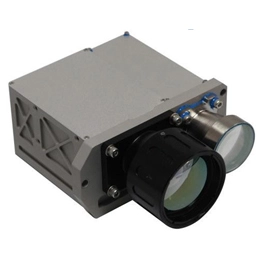
A ranger finder module — specifically a compact laser distance meter module designed for airborne, shipborne, and vehicle-mounted integration — addresses the gap between detection and actionable intelligence. When a thermal camera or EO sensor places a target pixel on the operator's screen, the laser distance meter module converts that line-of-sight into a verified range measurement. Combined with gimbal angle data and platform navigation, that range measurement becomes a geo-location — a coordinate that can be handed off to an intercept asset, overlaid on a chart, and logged for audit. EXATIMES' distance measurement module lineup — the EXALPU35A42E and EXALPU25A42E — is designed for exactly this integration architecture, with km-class ranging capability, RS422 serial interface, and ruggedization for the shock, vibration, and temperature extremes of operational platforms.
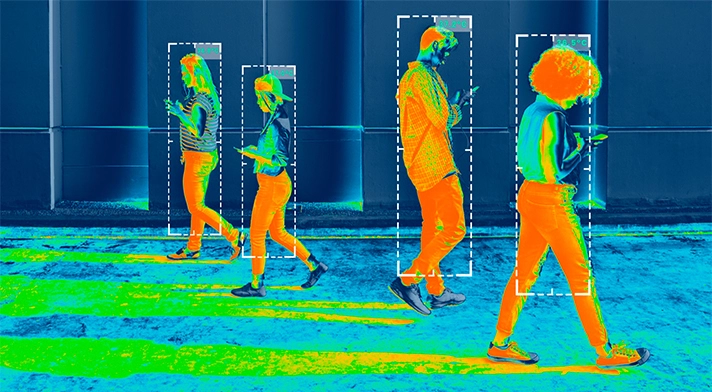
The fundamental limitation of imaging-only surveillance is that a pixel on a screen has no inherent distance information. An operator watching a thermal track of a fast boat can determine its bearing and its approximate size relative to the image frame, but cannot determine its range without an independent measurement. This limitation has three operational consequences that are increasingly costly in 2026.
Precise geo-location of a maritime target requires three inputs: the platform's own position (from GNSS/INS), the line-of-sight angles to the target (from the gimbal's azimuth and elevation encoders), and the slant range to the target (from the laser distance meter module). Without the range input, the geo-location calculation produces a line of bearing — a direction from the platform — rather than a point coordinate. For target handoff between platforms, for chart overlay, and for incident documentation, a line of bearing is not sufficient. A verified range measurement closes the geo-location calculation and produces a coordinate that can be acted on.
In 2026, the pressure to classify targets at longer standoff distances — before committing a patrol asset to a close approach — has increased as patrol resources are constrained and threat profiles have diversified. A long-range laser rangefinder module that provides accurate range at 15 to 35 km enables the operator to combine range, bearing, and thermal signature into a classification assessment at standoff, reducing the number of close approaches required per patrol hour and the associated risk to the patrol asset.
The accountability requirements for maritime security incidents have increased significantly in 2026. An incident report that documents the range, bearing, and thermal signature of a target at each decision point — approach, classification, intercept authorization — is substantially more defensible than a report based on operator estimates. The RS422 serial output of the EXATIMES distance measurement module provides a timestamped range data stream that can be logged alongside the EO/IR video record to produce a complete, auditable incident record.
A laser rangefinder module measures distance by transmitting a short laser pulse toward the target and measuring the time elapsed between transmission and reception of the reflected pulse. The distance is calculated from the round-trip time and the speed of light: distance equals (round-trip time × speed of light) / 2. The accuracy of the measurement depends on the precision of the timing circuit, the pulse width, and the signal-to-noise ratio of the received pulse — which depends on the target's reflectivity, the atmospheric transmission, and the beam divergence of the transmitter.
The EXATIMES EXALPU35A42E and EXALPU25A42E modules operate at 1064 nm wavelength with ranging accuracy of ±2 m across their full operating range. The operating frequency — 5 to 20 Hz for the EXALPU35A42E and 5 to 10 Hz for the EXALPU25A42E — determines the update rate of the range measurement, which is a critical parameter for tracking moving targets from a moving platform.
The 1.5 μm wavelength class — including 1535 nm — is widely described as more eye-safe than shorter wavelengths such as 1064 nm because energy at 1.5 μm is absorbed in the anterior structures of the eye (cornea and lens) rather than being focused onto the retina. This absorption characteristic means that the maximum permissible exposure at 1.5 μm is significantly higher than at 1064 nm, which allows higher pulse energies to be used at the same safety classification — enabling longer ranging capability at the same eye-safety level, or the same ranging capability at a lower hazard classification.
For operational platforms where the laser beam may be directed toward other vessels, aircraft, or personnel — as is common in maritime surveillance and border security applications — the eye-safe classification of the 1535 nm wavelength is an operational policy requirement in many organizations, not just a technical preference. EXATIMES' distance measurement module family notes operation at 1064 nm, 1535 nm, and 1570 nm, providing the wavelength options that different operational policies require.
Selecting the correct laser distance meter module for a maritime or border security platform requires locking the specifications that determine both the ranging performance and the integration cost before the system design is committed.
| Specification | EXALPU35A42E | EXALPU25A42E |
|---|---|---|
| Laser wavelength | 1064 nm | 1064 nm |
| Max distance measurement | 35 km | 25 km |
| Ranging capability — constructions | ≥35 km | ≥25 km |
| Ranging capability — traffic (vehicle) | ≥25 km | ≥20 km |
| Ranging capability — people | ≥15 km | ≥6 km |
| Ranging accuracy | ±2 m | ±2 m |
| Operating frequency | 5–20 Hz | 5–10 Hz |
| Beam divergence | ≤0.5 mrad | ≤0.3 mrad |
| Calibration rate | 98% | 98% |
| Single pulse energy | ≥80 mJ | ≥20 mJ |
| Dimensions (mm) | 250×200×110 | 175×141×79 |
| Weight | ≤3,600 g | ≤1,700 g |
| Supply voltage | DC 18–36 V | DC 18–36 V |
| Average power consumption | ≤150 W (avg), ≤200 W (peak) | ≤80 W (avg), ≤120 W (peak) |
| Communication interface | RS422 | RS422 |
| Operating temperature | -40°C to +60°C | -40°C to +60°C |
| Storage temperature | -55°C to +75°C | -55°C to +75°C |
| Impact resistance | 30 g | 30 g |
Ranging capability figures are specified under defined conditions: building targets at visibility ≥20 km and target reflectivity ≥0.2; vehicle targets (2.3 m × 2.3 m) air-to-ground at visibility ≥20 km and reflectivity ≥0.2; people targets (0.5 m × 1.8 m) at visibility ≥20 km and reflectivity ≥0.2.
Range and target type determine the model choice. The EXALPU35A42E's 35 km maximum range and ≥15 km people-ranging capability make it the appropriate choice for long-standoff maritime surveillance where the target may be a person on a vessel deck at 10 to 15 km. The EXALPU25A42E's smaller form factor — 175×141×79 mm and ≤1,700 g — and lower power consumption — ≤80 W average — make it the appropriate choice for weight- and power-constrained platforms such as smaller gimbals or UAV payloads where the 25 km maximum range is sufficient.
Beam divergence affects small-target performance at long range. The EXALPU25A42E's ≤0.3 mrad divergence produces a smaller spot size at range than the EXALPU35A42E's ≤0.5 mrad, which improves the signal-to-noise ratio for small targets — a relevant consideration for person-sized targets at extended ranges.
Operating frequency determines the tracking update rate. The EXALPU35A42E's 5 to 20 Hz operating frequency supports faster-moving targets and higher-bandwidth gimbal tracking loops than the EXALPU25A42E's 5 to 10 Hz. For platforms tracking fast boats at high closing speeds, the higher update rate of the EXALPU35A42E provides more frequent range updates for the geo-location calculation.
| System Component | Data Output | Role in Geo-Location |
|---|---|---|
| EO/IR camera | Target image and track | Detects and tracks target; provides visual classification |
| Gimbal | Azimuth and elevation angles | Provides line-of-sight direction from platform to target |
| Laser distance meter module | Slant range (RS422 serial) | Provides the distance component of the geo-location calculation |
| Platform GNSS/INS | Platform position and attitude | Provides the reference coordinate for the geo-location calculation |
| Navigation/fusion processor | Target coordinates | Combines range, angles, and platform position to produce target geo-location |
The geo-location workflow for a maritime surveillance sensor system combines four data streams: the EO/IR camera's target track, the gimbal's azimuth and elevation angle outputs, the laser distance meter module's slant range output, and the platform's GNSS/INS position and attitude data. The navigation fusion processor — which may be a dedicated processor or a software module running on the mission computer — combines these four inputs to calculate the target's geographic coordinates.
The laser distance meter module's RS422 serial interface provides the range data stream to the fusion processor. The RS422 interface supports long cable runs — up to several hundred meters — without signal degradation, which is relevant for shipborne installations where the module may be mounted on the gimbal at the mast head and the fusion processor is located in the operations room. The timestamping of the range data — synchronized with the gimbal angle data and the GNSS/INS data — is critical for the accuracy of the geo-location calculation, because the target, the platform, and the gimbal are all moving simultaneously.
The laser distance meter module must be co-aligned with the EO/IR camera's optical axis so that the laser beam is directed at the same point in the scene that the camera is tracking. The EXATIMES modules include a mechanical coupling port that facilitates co-alignment with the gimbal's sensor head. The boresight alignment — the angular offset between the laser beam axis and the camera's optical axis — must be calibrated during installation and verified after any shock or vibration event that may have disturbed the alignment.
The combination of verified range, gimbal angles, and platform navigation produces target coordinates that can be overlaid on a nautical chart in real time, transmitted to an intercept asset via data link, and logged with the EO/IR video record for incident documentation. This capability reduces the time from detection to actionable target report, reduces the number of uncertain sightings that require a close approach for classification, and produces the audit-ready documentation that 2026 accountability requirements demand.
Step one: define the mission ranges and target types. Identify the maximum required ranging distance and the minimum target size — construction, vehicle, or person — at that distance. These parameters determine whether the EXALPU35A42E or EXALPU25A42E is the appropriate model, and whether the 1064 nm wavelength or a 1535 nm eye-safe option is required by operational policy.
Step two: confirm the SWaP envelope. Define the available mounting volume, weight budget, and power budget for the laser module on the specific gimbal or platform. The EXALPU25A42E's 175×141×79 mm form factor and ≤1,700 g weight make it compatible with smaller gimbal payloads; the EXALPU35A42E's larger form factor and higher power consumption require a larger gimbal and a higher power budget.
Step three: lock the interface and data format. Confirm that the platform's mission computer or fusion processor has an RS422 serial input available for the range data stream, and define the command and control protocol for configuring the module's operating frequency and triggering mode.
Step four: design the mechanical integration. Define the mounting location on the gimbal, the boresight alignment procedure, and the protective window or radome specification for the maritime environment. Salt spray film on the transmit and receive optics is the primary environmental degradation mechanism for maritime installations — the window design and cleaning schedule must address this.
Step five: validate through acceptance testing. Define the acceptance test criteria — ranging accuracy against representative targets at defined ranges, boresight stability after vibration, and ranging performance in simulated haze conditions — and conduct the acceptance test before operational deployment.
| Cost Item | Without Laser Ranging | With Integrated Laser Distance Meter Module |
|---|---|---|
| Time-to-classify per contact | Higher — visual estimate only | Lower — verified range enables faster classification at standoff |
| Close approaches per patrol hour | Higher — uncertain sightings require close approach | Lower — range + thermal enables standoff classification |
| Incident documentation quality | Lower — operator estimates only | Higher — timestamped range log + EO/IR video |
| Boresight maintenance | Not applicable | Periodic check after shock/vibration events |
| Optics cleaning | Not applicable | Regular window cleaning to remove salt spray film |
| Spares | Not applicable | Protective windows, cables, connectors, swap module |
The ROI calculation for a laser distance meter module integration is most direct for operations where the cost of a close approach — fuel, crew time, and platform risk — is measurable. If a patrol vessel conducts 200 uncertain-sighting close approaches per year at an average cost of $2,000 per approach, and a laser ranging capability reduces this by 40% by enabling standoff classification, the annual saving is $160,000 — a payback period of less than one year against the module cost for most platform configurations.
In 2026, border and maritime security operations require target acquisition capability that goes beyond detection and tracking. A verified range measurement — provided by a compact, ruggedized laser distance meter module integrated with the platform's EO/IR camera and gimbal — is the input that converts a thermal track into a geo-location, a classification assessment, and an audit-ready incident record. The EXATIMES EXALPU35A42E and EXALPU25A42E distance measurement modules provide km-class ranging capability — up to 35 km against construction targets and up to 15 km against person-sized targets — with ±2 m accuracy, RS422 serial interface, -40°C to +60°C operating temperature, and 30 g impact resistance for the demanding environments of airborne, shipborne, and vehicle-mounted platforms.
Visit the laser distance module product page to review the full range, then submit the following details to receive a matched configuration and quotation:
| Parameter | What to Provide |
|---|---|
| Work condition | Platform type (ship, vehicle, tower, UAV), sea spray and salt fog exposure, vibration and shock profile, day and night operating requirements |
| Quantity | Prototype quantity, deployment volume, and spares plan |
| Size and spec | Required range (km), wavelength preference (1064 nm, 1535 nm, or 1570 nm), update rate (Hz), interface (RS422), power budget (DC input, average and peak) |
| Target metrics | Ranging accuracy goal, geo-location accuracy target, detection and classification concept, operating temperature range |
| Current problem | Inaccurate range estimates, poor small-target performance, integration or interface mismatch, unstable boresight alignment, high downtime |
1. What is a ranger finder / laser rangefinder module?
A laser rangefinder module measures distance by transmitting a short laser pulse toward a target and timing the round trip — distance equals half the round-trip time multiplied by the speed of light. The EXATIMES EXALPU35A42E and EXALPU25A42E modules use pulsed time-of-flight at 1064 nm with ±2 m accuracy, up to 35 km maximum range, and RS422 serial output for integration into target acquisition systems.
2. Laser distance meter module vs radar vs AIS/GNSS — which is better for maritime surveillance?
Radar provides wide-area detection and tracking but may not deliver the point-precision ranging to a visually selected target that geo-location requires. AIS and cooperative GNSS depend on the target carrying and transmitting a transponder — non-cooperative targets provide neither. A laser distance meter module complements EO/IR by adding precise line-of-sight range to a visually selected target, closing the geo-location calculation that radar and AIS cannot complete for non-cooperative small targets.
3. How does long-range ranging pay for itself?
Fewer close approaches per patrol hour — because standoff classification replaces uncertain-sighting close approaches — is typically the largest single ROI driver. Secondary benefits include better incident documentation that reduces legal and insurance exposure, faster target handoff that reduces intercept time, and reduced platform risk from fewer close approaches to potentially hostile targets.
4. Do we need to redesign our gimbal payload to add a laser ranging module?
Not necessarily. Integration typically requires a mounting bracket for mechanical co-alignment, an RS422 serial connection to the mission computer, and a power feed within the module's DC 18–36 V supply range. The main engineering work is SWaP budgeting — confirming that the module's weight and power consumption fit within the gimbal's payload envelope — and boresight alignment calibration. The EXALPU25A42E's compact form factor (175×141×79 mm, ≤1,700 g) is compatible with most medium-class gimbal payloads without structural modification.
5. What parameters should I provide for correct selection and quoting?
Required ranging distance and target type (construction, vehicle, or person), wavelength requirement (1064 nm or 1535 nm eye-safe), ranging accuracy and update rate targets, RS422 interface confirmation, power budget (average and peak), platform mounting volume and weight limit, operating temperature range, shock and vibration profile, and your intended integration architecture (gimbal type, EO/IR camera, INS/GNSS system).
 English